
Dear Hawk Ridge Friends,
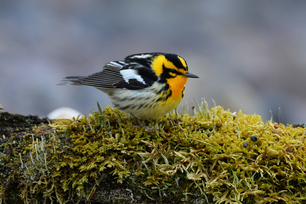 Sweet summer is upon us filled with beautiful sights and sounds of birds, flowers in bloom, and warm sunshine. Then, in just two short months on August 15th, we'll already be kicking off the start of the fall bird migration. It's not too early to start making plans for your visit this fall! Registration is now open for our annual Hawk Weekend Festival (Sept 18-20), as well as the international Raptor Research Foundation 60th Anniversary Conference we are hosting (Oct 26-31). We also invite you to join us for our summer naturalist offerings and find out more of what we've been up to in the reports below. Happy Summer Days!
 P.S. If you missed our last e-newsletter, you can view that and older versions by clicking HERE. Keep up with recent news by following us on Facebook and Instagram.
UPCOMING EVENTS
Summer Naturalist Series
Weekend Songbird Banding Programs at Hawk Ridge
Various July/Aug Weekends
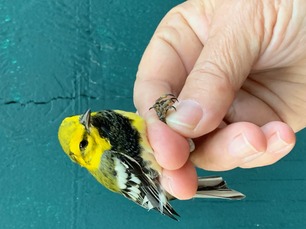
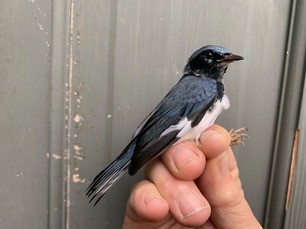
Join us for our Summer Naturalist Series! We had some fun exploration hikes in June and now you can join us in July/August for songbird banding! Step into the exciting world of songbird banding research and join the Hawk Ridge banding team to explore MAPS (Monitoring Avian Productivity and Survivorship)! Get an up-close look at wild birds, learn why we band birds, what we learn from studying birds in hand, and so much more! Whether you're a seasoned birder or curious about the natural world, this unforgettable adventure offers an amazing opportunity to work alongside Hawk Ridge researchers, explore the nature reserve, and witness conservation science in action! Help us uncover the stories of migration, survival, and life on the wing!
Dates: Saturdays July 4th (5th), 11th (12th), 25th (26th), & Aug 1st (2nd) (NOTE: backup weather dates in parentheses)
Time: 8-10am
Location: Hawk Ridge Nature Reserve (meeting location will be confirmed in email)
Cost: $10 members/students, $20 general
Register by 4pm day prior: send email to naturalist@hawkridge.org with name, number of participants, and phone contact to call/text with changes (payment link & meeting location will be sent)
What to Bring: dress in layers, water, sunscreen, insect deterrent, hiking shoes/gear
Special Notes: If you are interested in checking the bird nets with our banders, be prepared to hike over muddy (muck boots often needed!) and uneven ground. Trails are natural-surface and may be rugged with some rocky steps. *Note that bird banding can be cancelled or rescheduled at any time due to rain or high winds. Make sure to include an email and cell/text contact so that we can inform you of any changes in plans for the program.
Everyone Can Bird: Accessible Birding Series
Fri. July 24th & Sat. October 10th
September 18-20, 2026
REGISTRATION IS OPEN!! (early bird rates by Aug 17)
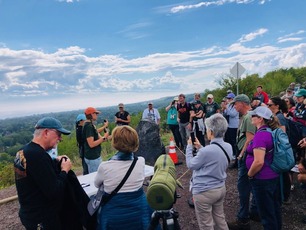
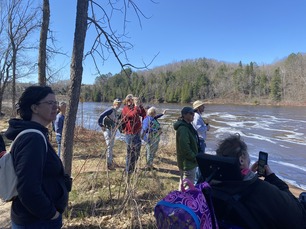
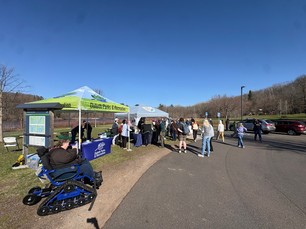
We invite you to join us to celebrate the amazing fall bird migration with us! Hawk Weekend is the annual festival held by Hawk Ridge Bird Observatory in Duluth, MN. Bird migration research and education programs have been shared with visitors throughout the world each fall at Hawk Ridge Nature Reserve for over 50 years! Join us for a fun weekend with a variety of birding field trips, nature hikes, programs, and activities for all ages!
Registration is OPEN and more details can be found HERE! Early bird rates through Mon. August 17th and all registration closes on Mon. September 14th. Be sure to register early, as many events have limited space. Kick-off the festival with us on Friday, September 18th at the Great Lakes Aquarium 6-9pm. Registration opens (6-6:30pm), social hour (6:30-7:30pm) will include a cash bar and light refreshments and the full aquarium will be open to tour, including the Raptor Ridge Exhibit. The Hawk Ridge Bird Observatory Annual Meeting will begin at 7:30pm (approx. 15 minutes) followed by keynote: Dr. Kristen Ruegg, Associate Professor of Biology at Colorado State University. Her research involves using genomic tools to track migratory birds across space and time and to understand how these animals may fare with environmental change, including the Bird Genoscape Project (birdgenoscape.org).
Raptor Research Foundation Conference
October 26-30, 2026
REGISTRATION IS OPEN!! (early bird rates by July 1)
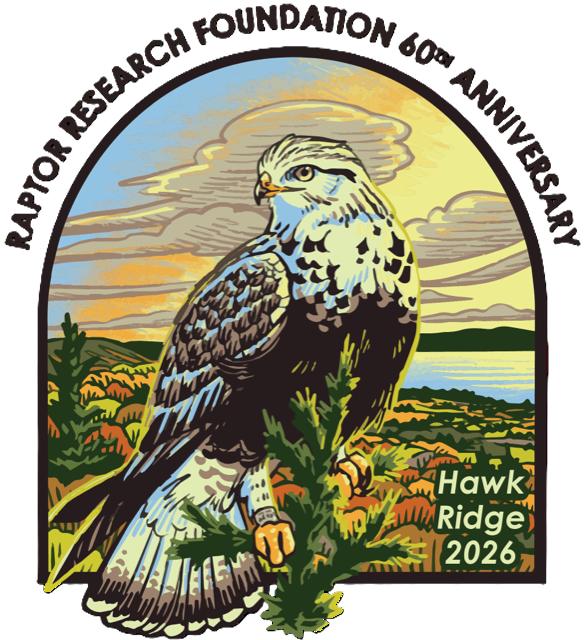
Hawk Ridge Bird Observatory is excited to announce we are hosting the international Raptor Research Foundation 60th Anniversary Conference this fall! The conference will be held October 26-30, 2026 at the Holiday Inn Downtown Duluth with pre/post field trips & workshops on Oct 27 & Oct 31. There is also a post-conference technical tree climbing workshop for raptor research Nov 2-4. Registration is open with early bird rates available until July 1st. Find out more about the Raptor Research Foundation go to: https://raptorresearchfoundation.org/2026-conference/.
P.S. Conference logo designed by artist Emma Regnier (@falcofous). We love seeing those beautiful Rough-legged Hawks with the fall Hawk Ridge Lake Superior landscape and hope you can enjoy them with us too!
International Birding Tour
Birding the Highlands of Guatemala
March 16-20, 2027
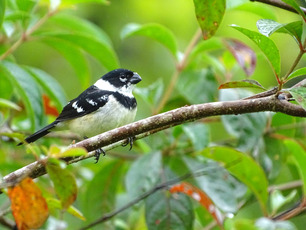
Join Hawk Ridge Bird Observatory for an amazing birding adventure! Guatemala is a richly diverse cultural center and a lush and vibrant paradise for birders. Set in the heart of Central America, it sits within one of the Western Hemisphere’s prime migratory corridors and is overwinter grounds for a wide array of North American breeding birds. Join Margie Menzies, Hawk Ridge Education Director, and local guides to look for more than 20 regional endemic highland species. There will also be an optional extension to visit the Tikal region and spend a day at a working tropical banding station at Las Guacamayas and learn about their efforts with both resident native species as well as tracking the wintering grounds of North American Species. More information and registration info HERE with Holbrook Travel.
RESEARCH UPDATES
Central Flyway Broad-winged Hawk Project
Update: More Nests & Possible Hatching!
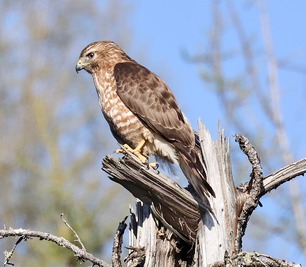
Over the past several weeks, we have been monitoring five active Broad-winged Hawk nests in the Duluth area and have located several additional nests outside the city. Within the last week we have observed signs that some eggs may have begun hatching. One clue that hatchlings have arrived is a change in the behavior of the incubating adult. Instead of sitting low in the nest, adults often sit slightly higher and may squirm or shift as nestlings move beneath them.
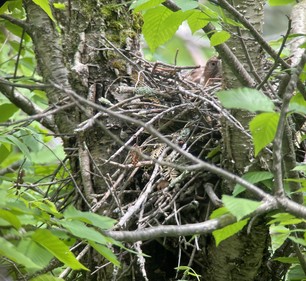
Can you spot the adult hawks hidden in these nest photos? Adult Broad-winged Hawks are remarkably quiet and well-camouflaged while on the nest. Most of the time, only a watchful eye peeking through the vegetation gives away their presence. The best opportunity to hear them is during prey exchanges. One adult will bring food near the nest and call to its mate. The adult on the nest carefully assesses whether it is safe to leave before retrieving the prey and returning to the nest. So far, we have observed adults delivering snakes, red squirrels, and voles. We will continue monitoring nests and searching for new ones through early July. At that time, researchers from Hawk Mountain will join us to deploy transmitters on nesting adults. Hawk Mountain has been conducting similar research for more than a decade and brings extensive experience and expertise to this effort.
.jpeg "BWHA Project 2026")
Help Us Find Broad-winged Hawks!
Would you like to help with this project? Community observations play an important role in the success of this project. We are currently accepting reports of Broad-winged Hawk sightings, vocalizations, and stick nests. You can submit your sightings using THIS SURVEY or email your observations to research@hawkridge.org. Thank you to everyone who has shared your sightings so far - we greatly appreciate your support!
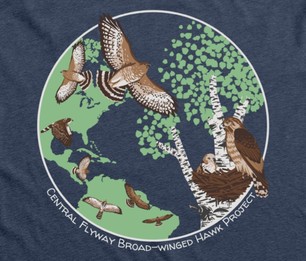
To learn more about the goals of the project click HERE. To support the project through donating any amount or sponsoring a transmitter click HERE. We have also launched a Broad-winged Hawk shirt fundraiser featuring artwork by local avian researcher and UMD graduate student, Abby Odegard. Get your awesome shirt today (short-sleeve, long-sleeve, and sweatshirts available!) with proceeds supporting Broad-winged Hawk research and conservation click HERE to order.
Thank you to Hawk Migration Association, Minnesota Ornithologists’ Union, and all of our generous donors for supporting this work!
American Kestrel Nestbox Monitoring Project
Update: Nestlings Have Arrived!
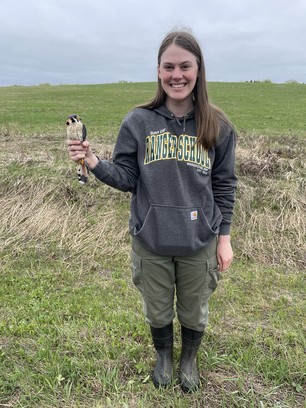
Exciting news from our American Kestrel monitoring program—many of this year's eggs have hatched, and nestlings are now filling boxes across the region! In late May, we banded 28 adult American Kestrels and recaptured five previously banded birds. Two of the recaptured adults had been banded in 2025, while three others were birds originally banded as nestlings in 2022, 2023, and 2025. These recaptures provide valuable information about longevity, survival, and breeding-site fidelity (whether birds return to the same area to breed year after year). Nest box occupancy remains high, with approximately 75% of boxes occupied across our study area spanning Clover Valley, Minnesota, and Douglas County, Wisconsin.
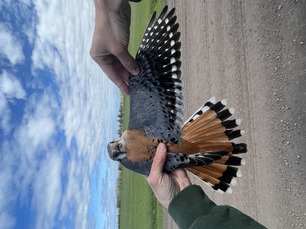
Kestrels are not the only species interested in the boxes, however. This season we have documented three boxes occupied by squirrels (both red and gray squirrels) and three occupied by European Starlings. With many chicks now hatched, the next milestone is fledging. About 30 days after hatching, young kestrels will leave the nest and begin preparing for their first migration south. Fall migration will be here before we know it!
Stay tuned for our next update, when we'll share highlights from this year's kestrel nestling banding season.
West Skyline Spring Count - 2026 Summary
Note: Full Report can be found HERE (excerpts below)
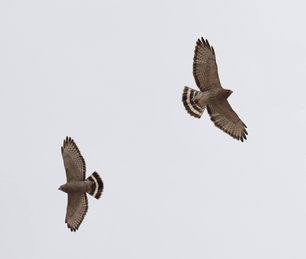
What a spring to remember at the West Skyline Hawk Count (WSHC) of Duluth, MN! Per protocol the count was conducted from March 1–May 31, tallying all migrating birds; this was our 9th consecutive spring of the count! The 2026 spring count season ran for 494 count hours and spanned 85 days (we did not count on seven whole days due to snow, rain, and/or fog… certainly a showcase—or snowcase?—of temperamental Duluth weather!). We observed at least two migrating raptors every day we did count, and we had 6 days on which we counted over a thousand raptors—all of those days in April. Our highest raptor count day tallied 2,170 raptors (April 15), and the season total ended with 24,278 raptors across 15 species.
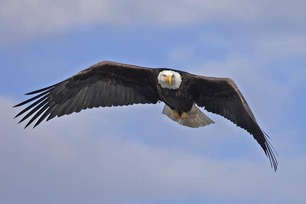
The first month of the count (March) started strong, with both Bald and Golden Eagles observed every day for the first two weeks, and one hundred eagles (including five Goldens) tallied on only the third day of the count. The second half of March waned relative to many years, however, with consistently cold temperatures, gray skies, and high humidity seeming to discourage migration. The peak of the 2026 March eagle flight saw only 326 eagles (March 23), unlike many years’ mid- to high-hundreds—and sometimes over a thousand—peak Bald Eagle days; but March eagle migration is extremely variable and weather-dependent across the years, and this year was indeed very cold. And at any rate, slow and steady wins the race, or at least gets third place, as the full 2026 WSHC season proved about eagles! (Spoiler alert! More on this later.)
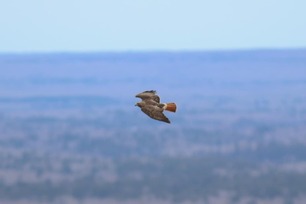
Cold temperatures and high humidity continued into the first week of April, and unfavorable weather systems shut down the count on multiple days, which seemed foreboding for the rest of the month. Then the winds shifted southwest and the sun came out on April 7, bringing a welcome surprise: the first big breakthrough of Red-tailed Hawks, and almost 500 of them at that! This incredible flight included one adult dark Harlan’s Hawk right overhead, a rare and special treat at the WSHC. We thought this might be our biggest Red-tail flight of the spring, but April 13 proved us wrong with 566 Red-tails—and then again on April 15, when we had a whopping 909 ‘tails, over a third of them counted within the last two hours of the flight as evening light faded! April 13 and 15 also included glorious views and excellent numbers of Sharp-shinned Hawks, Rough-legged Hawks, and Turkey Vultures. April 2026 went down as the highest-ever April in WSHC history for Sharp-shinned and Rough-legged Hawk numbers! We saw a few Broad-winged Hawks at the end of April, too; our highest count of the whole season for these little forest whistlers ended up being 1,088 Broad-wings tallied on April 25.
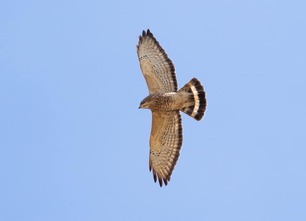
May brought green leaves(!), colorful warblers, a Swainson’s Hawk, around 3.5k more Broad-winged Hawks, and WSHC’s best-ever May total for Bald Eagles: cumulatively 1,875 of them, with the biggest day being 167 eagles on May 10. There were 8 total days in May with over a hundred eagles counted, hopefully a testament to a successful southern US breeding season, an essentially winter event that is followed by a late-spring push of very fresh southern juveniles and their tired parents heading up into the northland. (It’s our guess as to what they’re looking for up north, post breeding—better lakes? Less competition for food? Caribou Coffee?) Mid-May saw a number of rather cold days and minimal flight, but late May warmed up and brought the expected end-of-season push of Broad-winged Hawks, Bald Eagles, Canada Geese, and even a few more American White Pelicans and Sandhill Cranes.
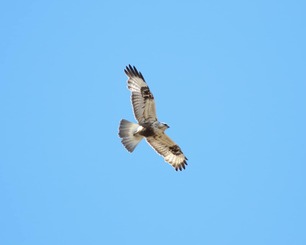
All in all, spring 2026 at the West Skyline Hawk Count was a wild ride, with an around-average total number of raptors packed into notably below-average hours spent counting, and some intense weather in between! Several raptor numbers stood out this spring: —Red-tailed Hawks (3,878 of them), certainly the star of this spring’s show, had the highest count this season out of the last 9 years; the most recent spring higher than this was in 2004 (7,398 red-tails)! —Rough-legged Hawks (361) had the second-highest count of the last 9 years; the most recent higher count was in 2018 (443 rough-legs). —Turkey Vultures (5,018), an ever-increasing presence in Northern Minnesota, were only surpassed by last year’s count (5,759), and we will not be surprised if next spring blows both out of the water! —Sharp-shinned Hawks (2,597) also held the second-highest count of the last 9 years; the highest count was in 2018 (2,637 sharpies). —Bald Eagles (6,118) were second place to last year (6,451) and, as mentioned prior, third place to the top season total from 2019 (7,727 eagles).
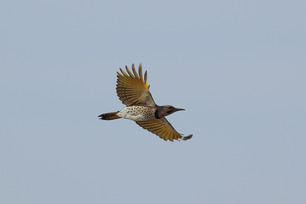
The West Skyline Hawk Count does not only watch hawks (or weather!), however; we also count all other bird species, and several non-raptors sure caught the spotlight this spring! On April 18, we counted an incredible reverse migration of Northern Flickers (1,021 of them!), part of a spectacular larger flight of yellowhammers flying down the North Shore to escape an unexpected, unfavorable shift in wind and temperature encountered during their normal northward migration. A second major reverse flight happened on May 4, this time involving over 850 warblers flying over the ridge (mainly Yellow-rumped and Palm Warblers, but including 6 at least other warbler species as well!), as well as dozens of sparrows, kinglets, finches, and swallows.
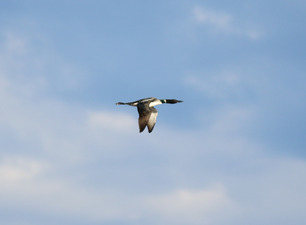
For waterfowl counts this spring, Tundra and Trumpeter Swans, Double-crested Cormorants, and American White Pelicans seem to continue on an upward trend (more long-term data is needed to be sure), while Common Loons and Sandhill Cranes were in the mid to low range this year, possibly having flown around Duluth rather than over it. Overall duck numbers were lower than the previous three years and certainly moved later due to the colder temperatures. We observed one Great Egret fly over on April 8, one of the earliest records of the species for Duluth ever.
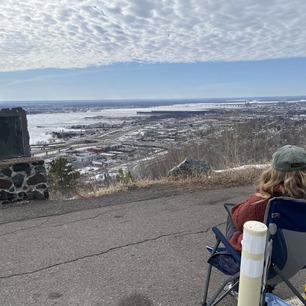
Aaaaaand that’s a wrap! This westernmost spring hawk watch on the Great Lakes is made possible thanks to a generous donation, as well as support from our members and donors, for which we are very appreciative. All in all we had a great year, so many people deserve a special shoutout! Frank Nicoletti, Sean McLaughlin, Peter Mundale, and Ezra Hosch provided invaluable support as relief counters, and “the boys” John Edwards, Ralph Larsen, Ed Longhway, Dave Carman and others gave their precious time and effort in spotting and calling out birds (and bringing pastries!!). A HUGE thanks to naturalist Lydia Ihde, who not only provided relief and count support, but also encouragement, common sense, entertainment, and sustenance in times of need! A special thank-you is due to our volunteers who braved the cold spring to watch some hawks, and to Emily Pavlovic for her unending wisdom and logistical support.
And as always, THANK YOU to every person who stopped by, chatted, and enjoyed the incredible avian sights of West Skyline Hawk Count! We hope to see you next year at the count, and before then be sure to stop by this fall at Hawk Ridge!
Marie Hosch
Spring Counter
P.S. You can find our spring daily counts and totals via Trektellen HERE and via HawkCount HERE.
Hawk Ridge 2026 Summer Songbird Banding (MAPS)
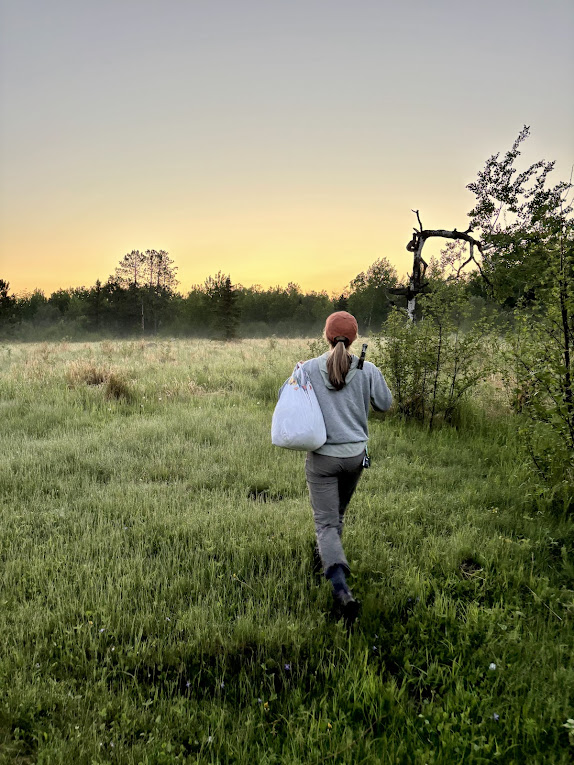
In 2026, we will participate in our 12th season of MAPS (Monitoring Avian Productivity and Survivorship) summer banding. On May 17th we conducted a well-attended training session for new and returning volunteers. Unfortunately, we were unable to band during the training because of too much wind, but we were able to share protocol updates for this year’s season and get new participants acquainted with seasoned veterans and get everyone excited for what is to come for the season. June 6, 2026 was our first of 7 banding sessions and things got off to a great start. We had 34 birds captured, which included 13 different species, 17 newly banded birds and 16 recaptures from previous banding years. We also had one unbanded Ruby-throated Hummingbird. Hummingbirds require a special permit to band because of their small leg size, and no one on the Hawk Ridge team has that permit, so we are unable to band them as of yet.
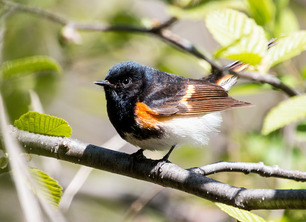
American Redstarts and Veeries won the prize for the most birds captured with 2 new birds and 4 recaptures for Veeries and 3 new and 4 recaptures for American Redstarts. Veeries migrate to South America every winter occupying at least two different regions during their time there: northern countries and the Southern Brazil Amazon region. One returning Veery is at least 7 years old and another at least 5 years old. American Redstarts are also long distance migrants - though not quite as long as the Veery, with most wintering in Central America, and a few going further on into Colombia in South America.
.JPG "Mourning Warbler")
Our returning Mourning Warblers are also reflecting older birds with 2 recaptures, one at least 7 years old and the second at least 5 years old. Most Mourning Warbler will also travel all the way to South America for the winter. It’s incredible to think about these small birds making such long journeys and miraculously turning up back in the same breeding locations here at Hawk Ridge year after year. There is no GPS guiding these birds, yet they still manage to travel incredible distances to return and be caught in the same nets at Hawk Ridge.
Every bird has a story to tell of course, but many of these small colorful neotropical migrants routinely make journeys that defy human imagination! Stay tuned for further updates as we progress through the 2026 MAPS season at Hawk Ridge. We know there are lots more stories yet to be told! And many thanks to all our dedicated volunteers for those incredibly early morning starts!
OTHER NEWS
NEW Accessible Trail Loop Construction Underway!
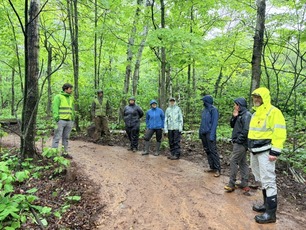
We are excited to announce that the new accessible trail loop construction at Hawk Ridge Nature Reserve is underway! This is part of the first phase of the Hawk Ridge Nature Reserve’s Facilities Improvements Mini-Master Plan for Accessibility, Safety, & Education. The new accessible trail loop includes improved access to current education program area, boardwalk upgrades, and will connect to future accessible education facilities. Future improvements include additional education program areas, accessible restroom, interpretive signage, roadway safety & parking improvements, observation viewing decks, picnic shelter, amphitheater, & nature playscape.
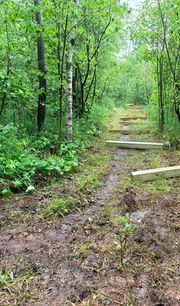
Construction is expected to take approximately six weeks and will be completed in advance of the 2026 fall bird migration. The public is advised that small sections of trail may be temporarily closed to accommodate construction and ensure public safety. Please follow all trail closure notices. Funding for this project was provided by the Minnesota Environment and Natural Resources Trust Fund as recommended by the Legislative-Citizen Commission on Minnesota Resources (LCCMR). Hawk Ridge Bird Observatory is working with the City of Duluth, SAS+ Associates, and Zenith Trail Contracting on this collaborative project.
Education Scholarship Funding Needed!
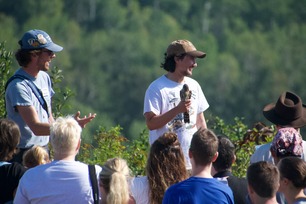 Contribute to the Hawk Ridge Education Scholarship Fund today! Hawk Ridge Bird Observatory offers environmental education program opportunities for schools Pre-K through college from all across the region. We have continued to keep our program costs low and affordable for schools to have the amazing opportunity to experience and learn about both spring and fall migration through educational programming.
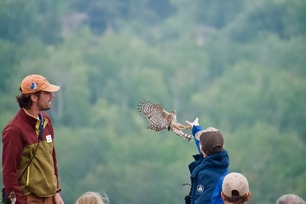
Each year the need for assistance with programming fees continues to grow with an average of 65% of schools visiting requesting scholarship assistance. The Hawk Ridge Education Scholarship Fund allows us to provide these types of scholarships to schools. In the past 5 years, Hawk Ridge has awarded nearly $8,000 dollars in scholarship funds! Help us help students and schools come to experience Hawk Ridge! We are hoping to raise at least $2,000 in 2026 to award scholarships. To make a donation to the Education Scholarship Fund, please click HERE. We truly appreciate your support!
Seasonal Hosts Needed for Hawk Ridge Staff
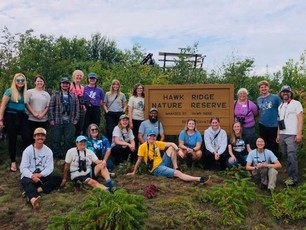
We are currently seeking hosts for Hawk Ridge staff (primarily 8/26-11/1, but a few starting mid-Aug to mid-Nov). Hawk Ridge has amazing seasonal staff, trainees, and apprentices conducting the important bird research and education programs. Many of our staff are traveling from out of state to work for or train with Hawk Ridge for 2-3 months coinciding with the magnificent bird migration. We depend on wonderful hosts to provide lodging for our seasonal staff during that time. We are so grateful to all that have helped host through the years - thank you! We've also seen many special connections built between the host family and staff. If you have a spare room, rental space, or even full house that you'd consider for hosting, please contact Janelle Long, jlong@hawkridge.org or call 218-428-6209.
Thank You for Your Support!
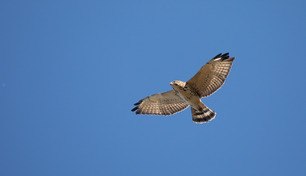
Hawk Ridge Bird Observatory thanks all of our supporters. We appreciate you! As a nonprofit organization, we are primarily funded by individual gifts to put our bird migration research and education programs in action. Below are some of the ways you help us keep sharing the magic of the bird migration!
Ulvang Memorial Fund for Count and Banding Research
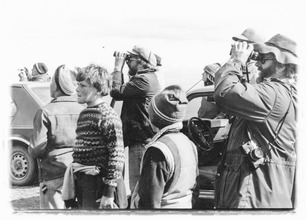
Hawk Ridge Bird Observatory is happy to announce the Ulvang Memorial Fund to help support count and banding research at Hawk Ridge Nature Reserve. The Ulvang Memorial Fund is named for two boys who were inspired by the original Duluth hawk count. Bill and Bob were affected by the kindness, encouragement and enthusiasm of teachers and mentors who taught them about birds in general and hawks in particular. The story begins about 75 years ago in the very early years of the hawk count at what would later be formed as Hawk Ridge Nature Reserve, which you can read more about by clicking HERE.
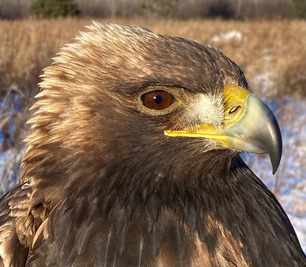
Please consider donating to the Ulvang Memorial Fund. Your gift will help continue the important long-term monitoring efforts at Hawk Ridge that contribute to bird conservation research and continue to inspire others about birds for generations now and in the future! DONATE HERE TODAY!
Support Hawk Ridge by Shopping!
Amazon Prime Week June 23-26th!

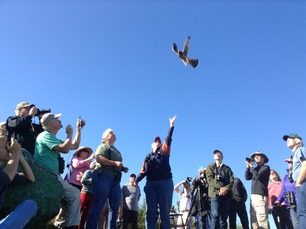 If you're already a member of Hawk Ridge, we sincerely appreciate your support! THANK YOU! If you're not a member and have enjoyed your experience with Hawk Ridge, we invite you to renew or join as a Hawk Ridge member today! Our memberships and donations help drive our bird conservation research and education programs. You can check out our exciting membership benefits and join or renew online HERE!
Simply Donate
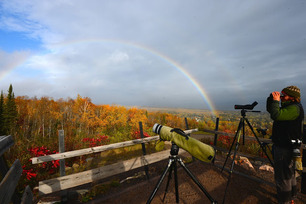 You can always simply donate online by clicking HERE or by mailing a check made out to Hawk Ridge Bird Observatory, P.O. Box 3006, Duluth, MN 55803.
Thank you again for your appreciated gift of support! Hope to connect with you soon - feel free to reach out by email at jlong@hawkridge.org with any questions.
Sincerely,
Janelle Long
Executive Director
Hawk Ridge Bird Observatory
Hawk Ridge Bird Observatory
P.O. Box 3006
Duluth, MN 55803-3006
Call: 218-428-6209
Contact: mail@hawkridge.org
Visit: www.hawkridge.org
501(c)3 Non-Profit Organization
Federal Tax ID 76-0746366

No comments:
Post a Comment